Strengthening Water Supply Management in Ukrainian Hromadas
Water supply systems in Ukrainian cities remain frequent targets of Russian attacks. The consequences of these strikes go far beyond damaged infrastructure, directly affecting people’s safety and the daily life of hromadas.
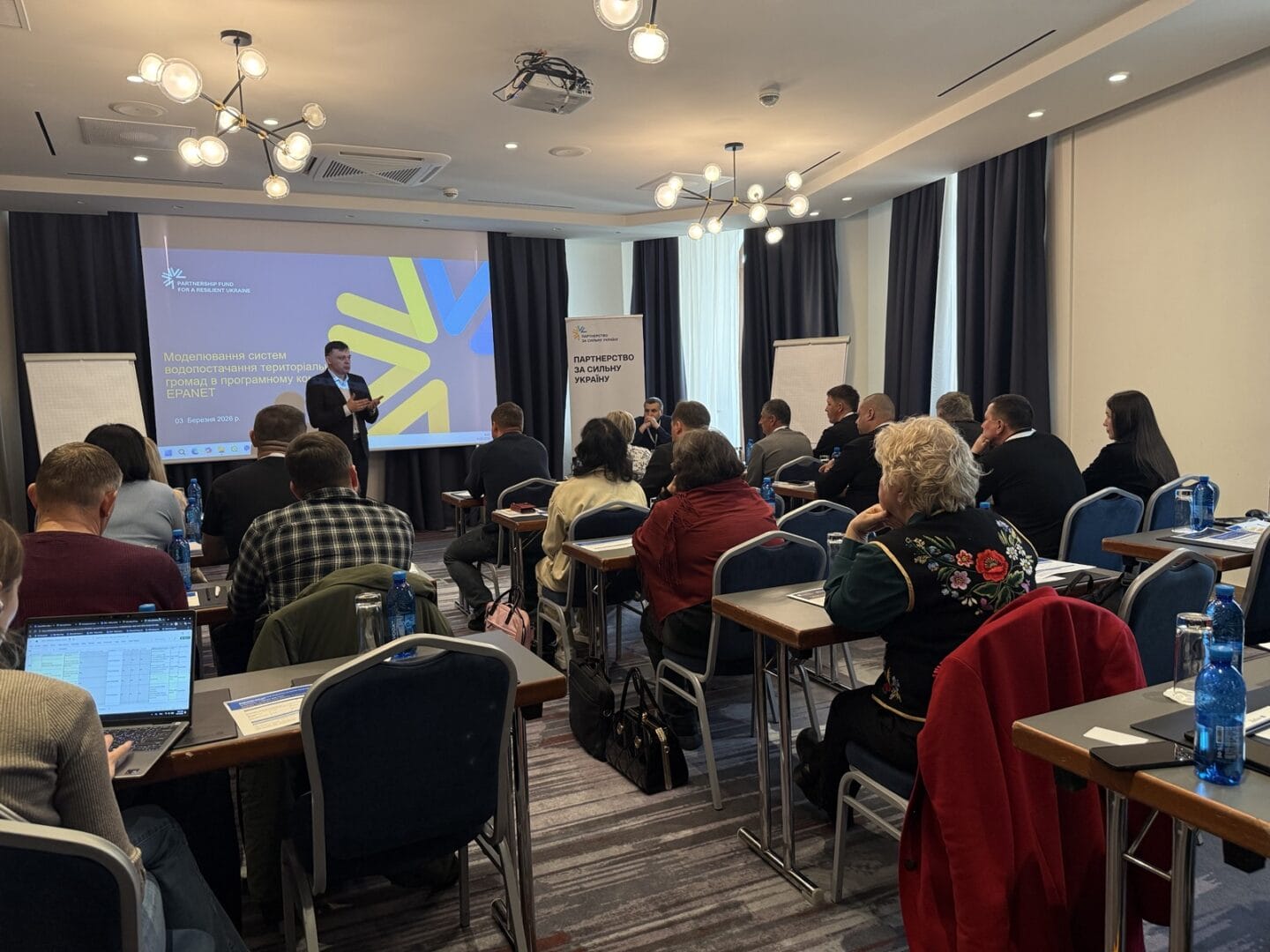
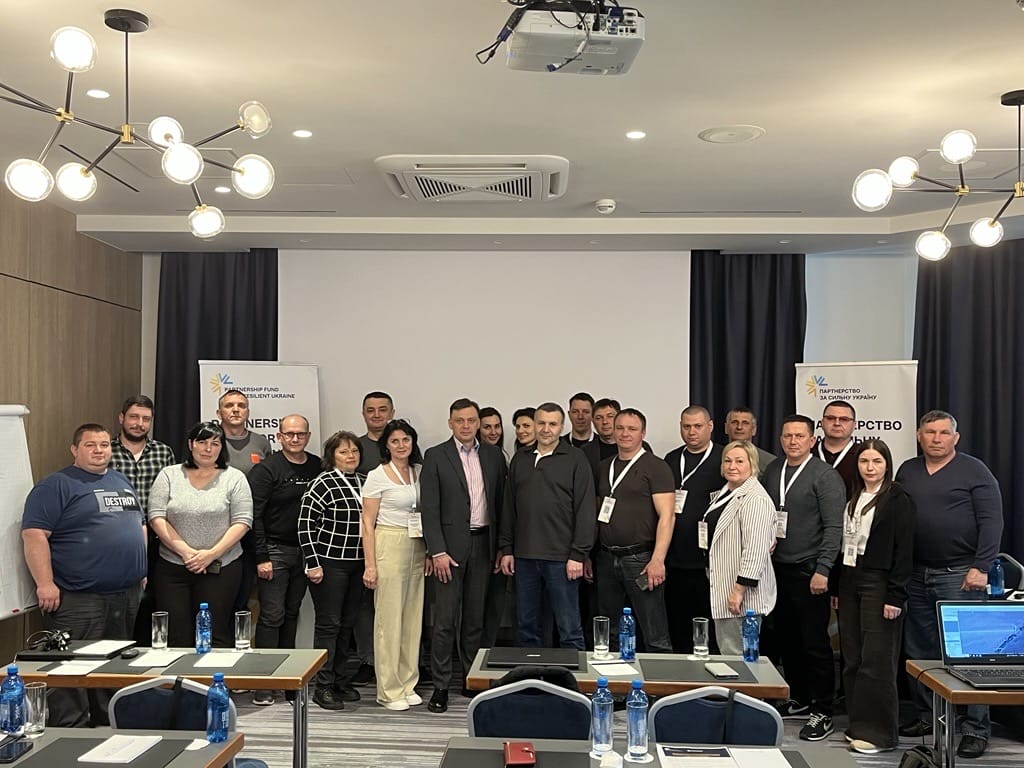
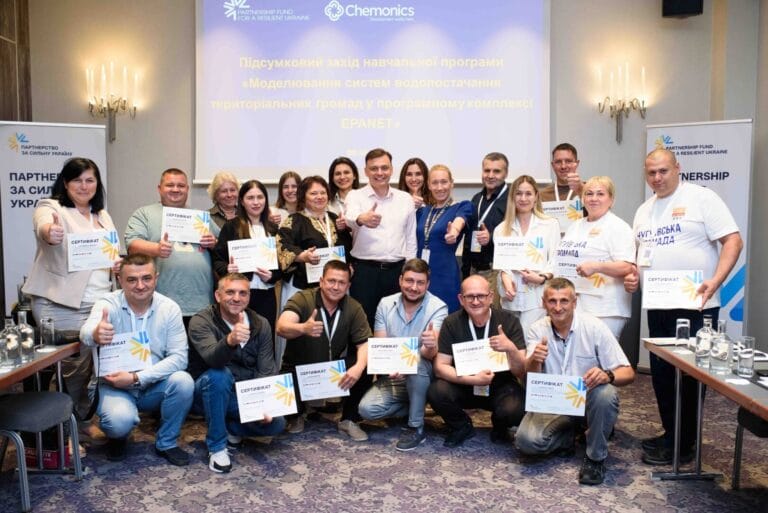
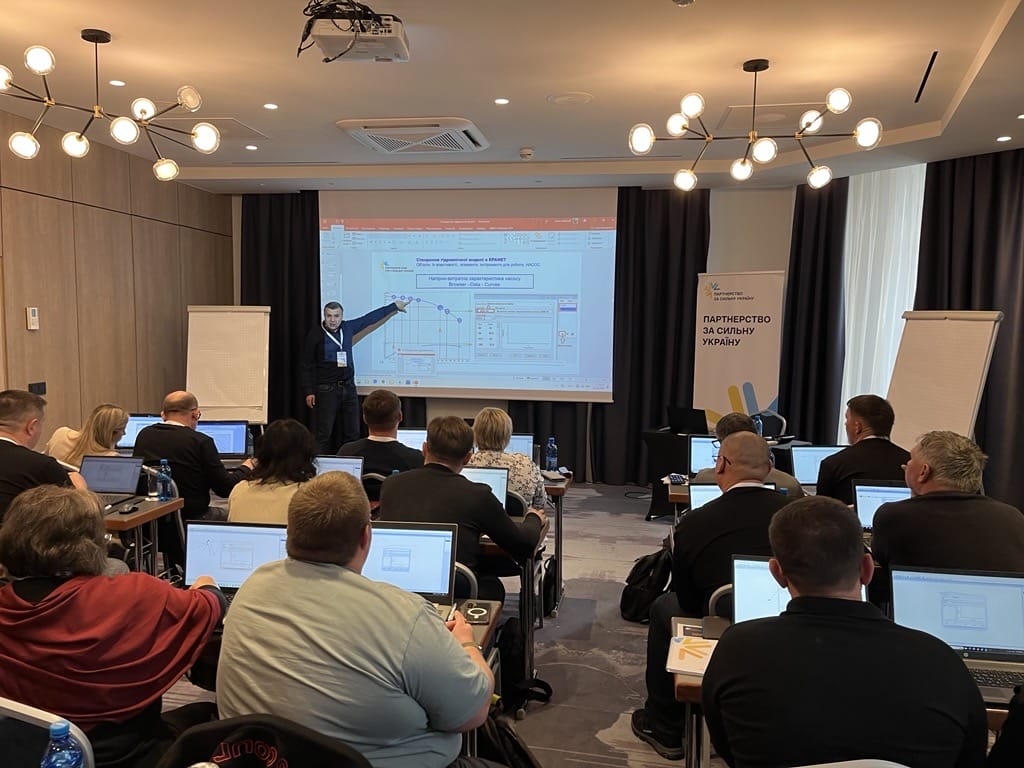
Ukraine’s international partners, through the Partnership Fund for a Resilient Ukraine (PFRU), support initiatives aimed at strengthening social cohesion and resilience, including by enhancing hromadas’ capacity to plan, manage, and improve their water supply systems more effectively. This was the focus of the training, “Modelling Water Supply Systems of Territorial Hromadas Using EPANET,” which took place in Kyiv from 31 March to 2 April.
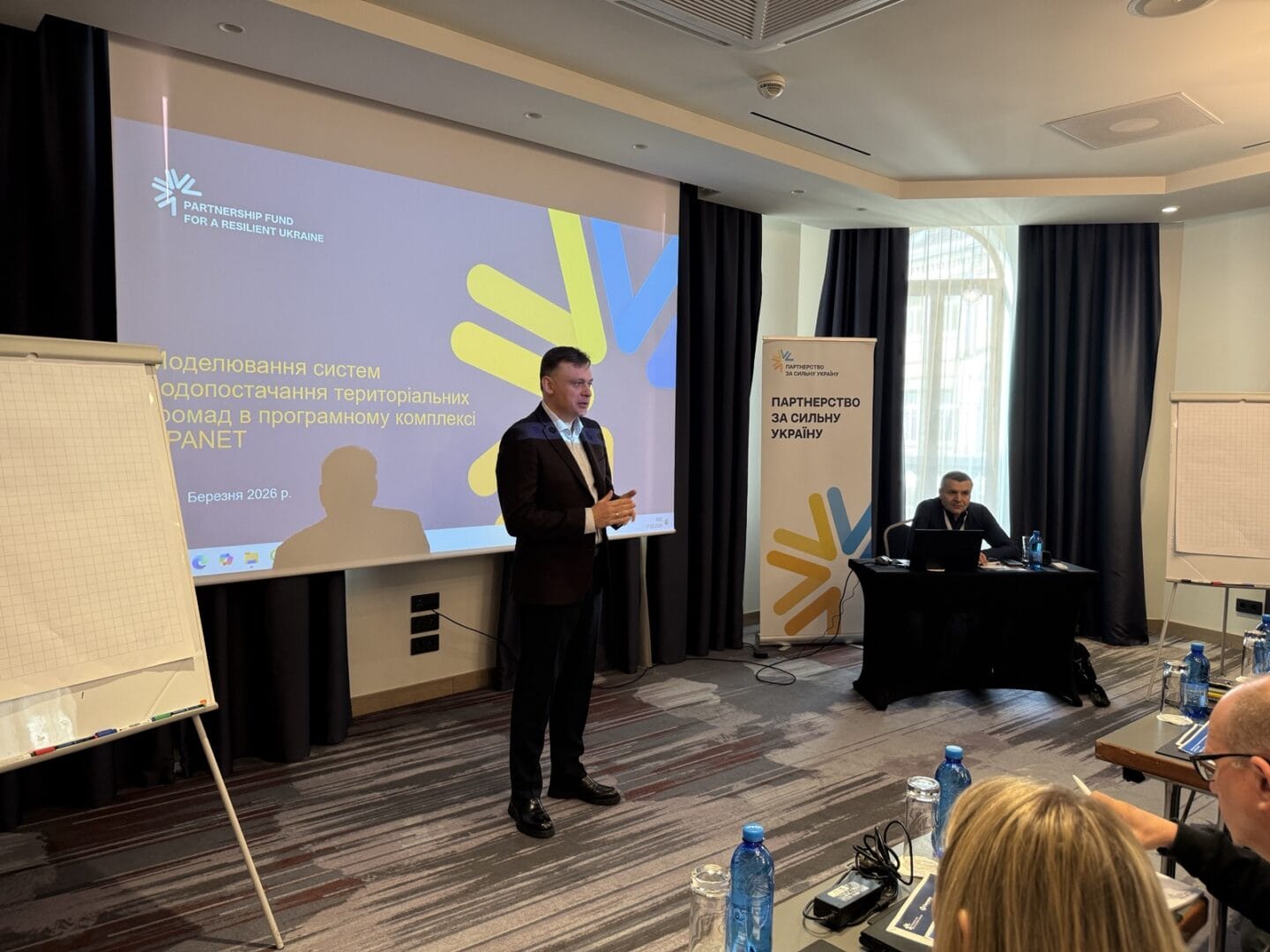
The training brought together more than 20 representatives of municipal utility companies and local self-government bodies from nine communities in Dnipropetrovsk, Odesa, Kharkiv, Kherson, and Chernihiv oblasts covered by programme support. These included specialists responsible for the operation of water supply systems, as well as officials involved in decision-making on their construction, reconstruction, and the allocation of resources in the housing and utilities sector.
The activity was developed on the basis of a needs assessment conducted in hromadas covered by PFRU programme support, which identified a particularly strong demand for hydraulic modelling of water supply systems. This demand is no coincidence: communities need practical tools that help them assess network performance more accurately, identify problem areas, plan upgrades, and make technical decisions based on calculations rather than assumptions.
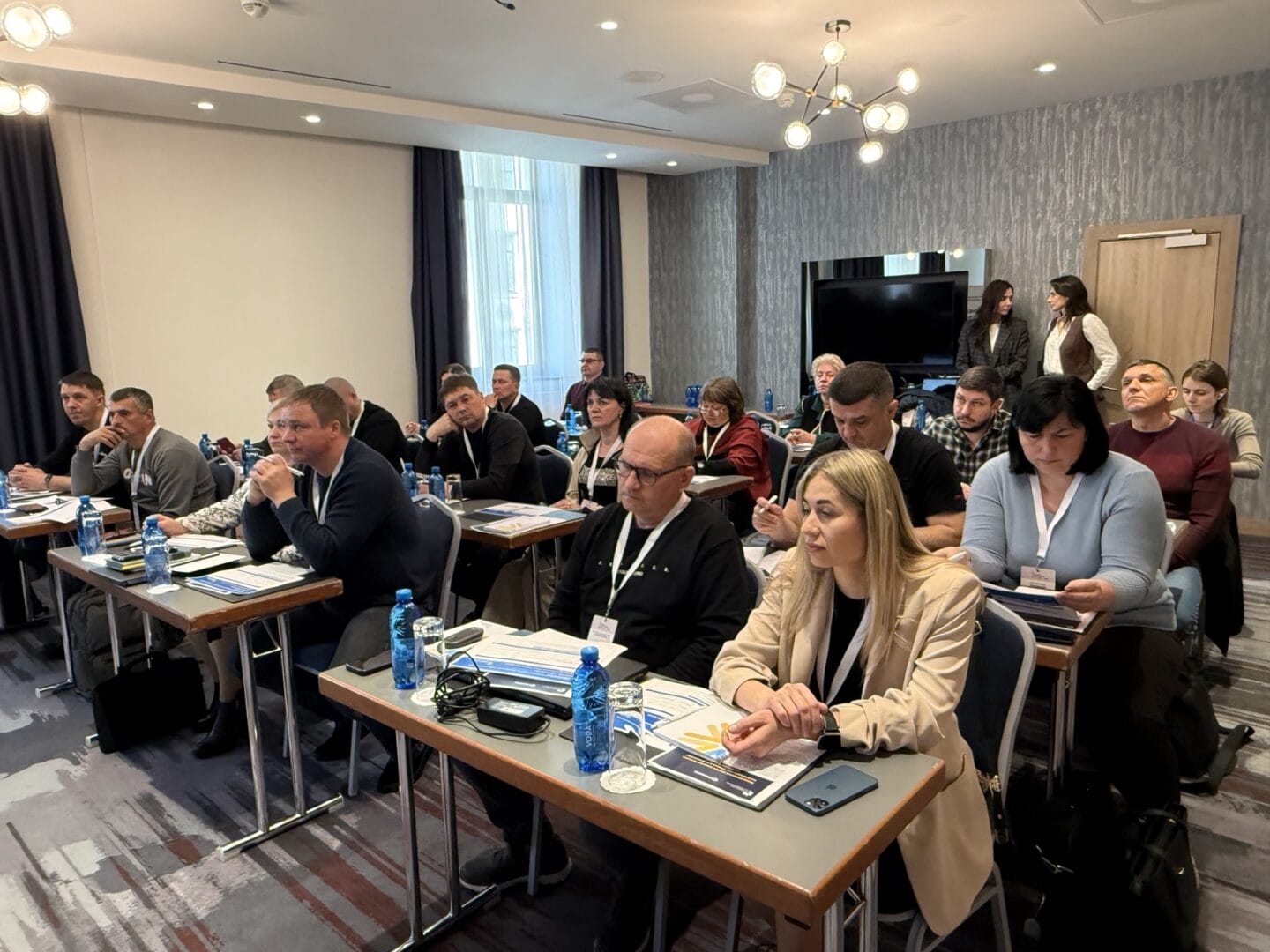
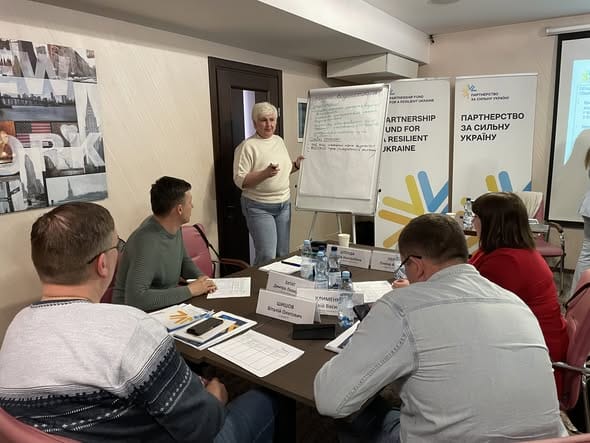
During the training, participants worked with EPANET, a free software tool for modelling water supply systems. It enables users to calculate water flow, pressure, consumption, reservoir levels, and other key network parameters. The training programme covered the fundamentals of hydraulics, network and equipment characteristics, model development and calibration, as well as the use of modelling results for practical decision-making.
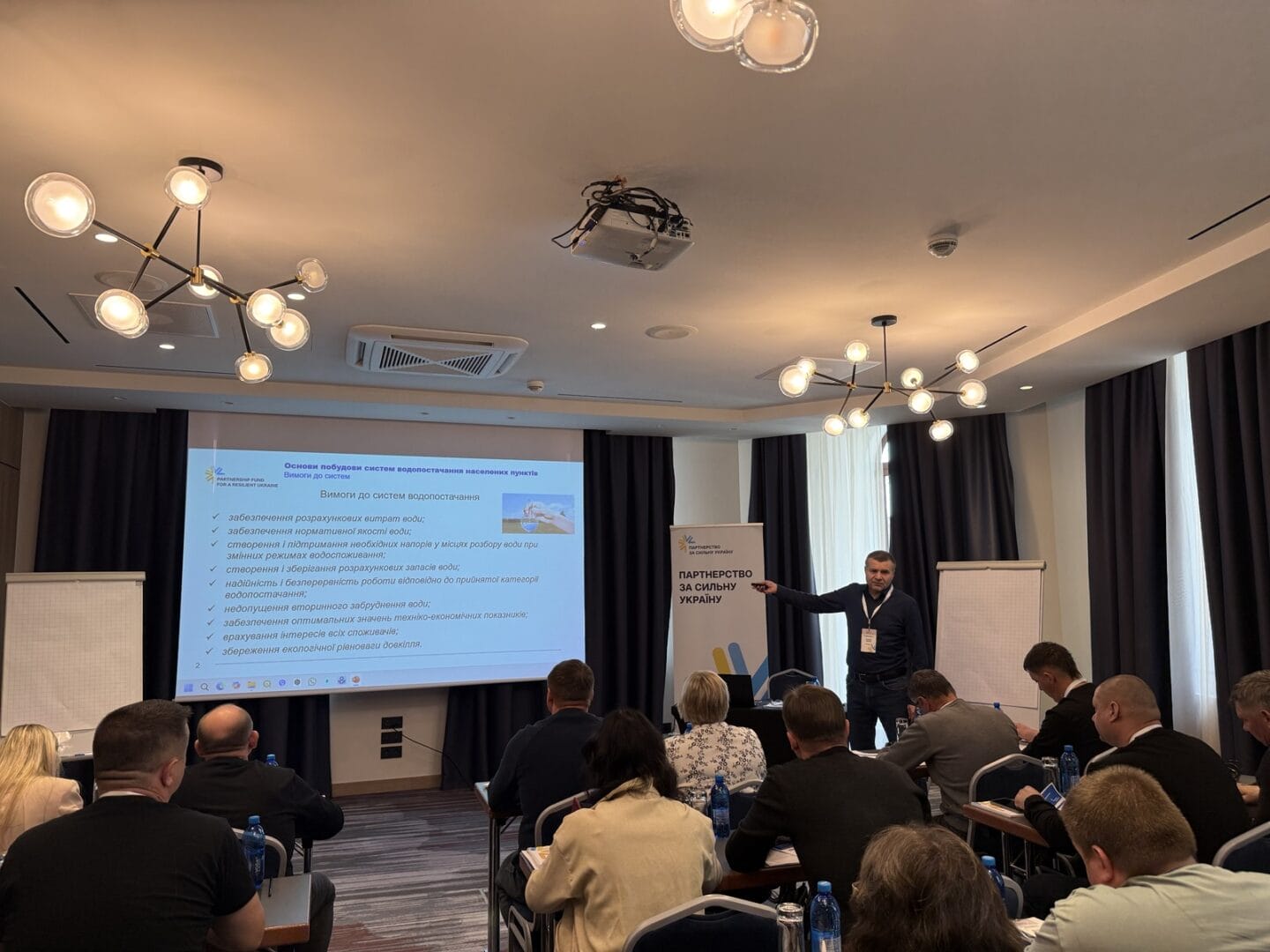
The work does not end with the training module. Over the next two months, participants will develop their own projects and create hydraulic models of water supply systems in their communities. During this period, they will receive mentoring support from water supply expert Serhii Karelin, before meeting again in Kyiv to present the solutions they have developed.
This activity helps communities not only strengthen their technical capacity, but also move towards more precise, evidence-based, and resilient management of water supply systems in wartime conditions.