Color scheme:
Font size:

Reclaim

Project Goal


Reclaim helps Ukraine keep communities most affected by occupation and displacement politically visible, socially connected, and firmly on the national agenda. It does this by harmonising institutional responses, humanising the lived experiences of people affected by the war, and sustaining public interest so that disconnection and long-term fragmentation do not deepen over time.

The project brings together government, civil society, and communities through a clear, practical framework that links national policy-making, community experience, and local resilience. By advancing strategic, people-centred solutions, Reclaim supports Ukraine in maintaining trust, keeping its institutions relevant to people’s needs, and preparing the ground for the longer-term work that will follow once the conflict ends.

What the Project Does

Reclaim’s work is organised around three interconnected areas that together strengthen Ukraine’s ability to stay connected to communities affected by the war and occupation, and plan for the long term.

Harmonise – strengthening coherence and responsiveness

This area focuses on helping Ukraine develop more coherent, inclusive, and evidence-informed responses to challenges created by conflict and displacement. It supports stronger policy direction, better coordination between institutions, and clearer information flows across government, civil society, and international partners. By reducing fragmentation and aligning priorities, this strand helps ensure that national responses are consistent, practical, and rooted in shared understanding.

Humanise – reclaiming people and narratives

This area restores and sustains the human dimension of Ukraine’s engagement on conflict-affected issues. It centres the experiences, identities, and agency of people affected by occupation and displacement, and helps translate their stories into connective narratives, inclusive approaches, and long-term societal resilience. The strand works with youth, cultural actors, media organisations, and communities to ensure that people remain visible, understood, and part of Ukraine’s future thinking.

Sustain – turning insight into evidence that guides long-term decisions

This area focuses on creating a durable, nationally owned platform that brings together research, local insights, and institutional knowledge. It synthesises this information into practical analysis that guides decision-making, strengthens internal learning across Reclaim, and supports more coordinated policy and programming. The platform ensures that knowledge does not sit in silos but remains accessible, actionable, and relevant over time.

Key Activities

Building on these three areas of work, Reclaim delivers a set of practical activities that strengthen national responses, elevate people’s experiences, and ensure decisions are grounded in evidence.
Policy Leadership, Coordination, and Implementation

These activities help reduce fragmentation, strengthen strategic direction, and support more coherent policy and implementation.

  • Convening key actors to reduce fragmentation and bring government institutions, civil society, experts, and international partners around shared priorities.
  • Supporting national bodies to set clearer policy direction, strengthen coordination, and communicate their plans in ways the public can understand.
  • Facilitating focused thematic groups, where experts and practitioners collaborate on specific issues and develop practical ideas for policy and implementation.
  • Helping institutions use evidence more effectively by linking decision-makers with insights emerging from analysis, stakeholder dialogue, and community perspectives.
Community Resilience, Inclusion, and Participation

These activities support communities affected by displacement and occupation, with a particular focus on young people, civic belonging, representation, and trusted spaces for engagement.

  • Supporting young people affected by displacement, improving access to education, strengthening identity and civic belonging, and creating opportunities for engagement and leadership.
  • Strengthening connections between displaced communities and their representatives, helping them maintain communication and contribute to future planning.
  • Creating trusted community and youth spaces that offer peer support, reliable information, and opportunities for dialogue, expression, and resilience-building.
Research, Thought Leadership, and Knowledge for Action

These activities generate evidence, shape public understanding, and connect research and lived experience to better policy and programming.

  • Working with cultural and media actors to document and share lived experiences, helping ensure that stories of life under occupation or displacement remain visible and understood.
  • Generating timely and credible research and analysis that supports coherent policy development and helps actors adjust to changing conditions.
  • Building the Knowledge-to-Action Platform, a national resource that consolidates research, knowledge, synthesises local and national insights, and drives coordinated policy and programming on issues linked to occupation and displacement.

Results

Reclaim aims to strengthen coordination across institutions, improve how evidence informs national decisions, and ensure that people’s experiences remain central to Ukraine’s approach.
Results

Partners

Reclaim works with a broad network of Ukrainian institutions, civil society organisations, local actors, and international partners. At the national level, the Ministry for Development of Communities and Territories is the project’s principal government counterpart, guiding strategic direction and policy development. Reclaim also cooperates closely with the Permanent Mission of the President of Ukraine in the Autonomous Republic of Crimea, relevant committees of the Verkhovna Rada, the National Security and Defence Council, and other ministries whose mandates intersect with education, youth, culture, social policy, and community resilience.
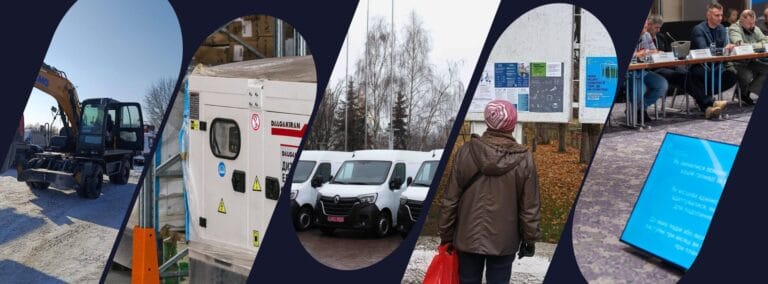
At the regional and local levels, the project engages displaced local authorities and administration structures that continue to support their communities from outside their home regions. Civil society, cultural organisations, media platforms, and expert groups form another core pillar of partnership, helping ensure that people’s experiences are understood, shared, and represented in national discourse. Reclaim also maintains coordination with international and diplomatic partners to sustain a broad and credible ecosystem around its work.

Results